Posts

STEEL MEASUREMENT

Image
DO YOU KNOW STEEL IS MEASURED IN MM BUT ORDERED IN KG? Steels or rebars for reinforced concrete are measured in mm from drawing and recorded in Bar Bending Schedule (BBS). Example of B.B.S Do you ever think how it is converted into kilograms or tonnes, as it is written or filled in Bill of Quantity (BOQ)? Example of B.O.Q  There is a simple formula that is used for steels or rebars conversion from mm into kg (D 2 /162), This is important as always we fill B.O.Q and ordering steel in terms of kilograms or tonne. This formula used to find the weight of steels per length measured, Therefore, Quantity in Kg/m = D 2 /162, where "D" is the diameter of steel in mm. For example If we have 106m of 12mm steel from structural drawing and BBS and we want to fill this quantity into B.O.Q we have to convert it into KG. Soln Quantity of steel per meter = D 2 /162              ...

HOW TO CHECK THE QUALITY OF CEMENT AT SITE

Image
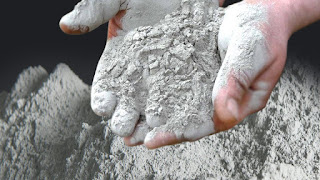
HOW TO CHECK THE QUALITY OF CEMENT AT SITE CEMENT as the one of the important material used in construction, it’s quality is significant to the strength of what is to be built either building or any other structure, the quality of ordered cement should checked at site as one of quality control activity at site. Today we will discuss how to check the quality of cement at site, to check the quality of cement we need to pass some easy tests which are described below. 1. DATE OF PACKING: It is important to check the manufacturing date of the cement because strength of cement decreases with time, cement should be used before 90 days from the date of manufacturing as the strength of cement decreases in the following percentages. AGE OF CEMENT % REDUCTION IN  STRENGTH 3 Months 20   - 30 6 Months 30   - 40 9 Months 40   - 50 2. COLOR OF CEMENT Always the color of cement should be uniform that m...

PLASTER WORK CALCULATION

Image
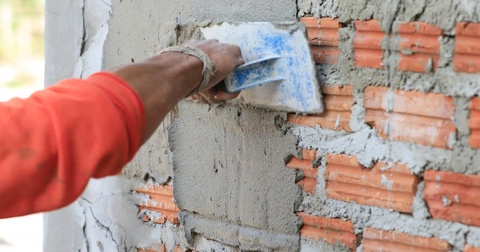
1. PLASTER WORK ESTIMATION A man is plastering a  brick wall  The amount of cement mortar required for 1m 2 coverage on wall for a plaster work. Let the thickness of the plaster for one coat external rendering be 15mm. The volume of a plaster per square meter is given as shown below Volume = 1m x 1m 0.015m             = 0.015m 3 The dry volume of cement mortar for plaster can be calculated as follows Dry volume = Wet volume x Wet to dry conversion factor (1.25 - 1.3)                     = 0.015 x 1.30                    = 0.0195m 3 The mortar constituents can be calculated based on the cement sand mix ratio for example in our calculation we will use mix ratio 1:4 (cement: san...

DRAWINGS USED IN THE CONSTRUCTION INDUSTRY

Image
DRAWINGS USED IN THE CONSTRUCTION INDUSTRY INTRODUCTION Construction drawing is the general term used for drawings that form part of the production information that is incorporated into tender documentation and then the contract documents for the construction works. This means they have legal significance and form part of the agreement between the employer and the contractor. The main purpose of construction drawings is to provide a graphic representation of what is to be built. Construction drawings should be concise and coordinated to avoid, wherever possible, ambiguity and confusion. Delays and misunderstandings can be minimized by properly coordinating the drawings. Specifications will detail the materials, standards, techniques, and so on required to carry out the works. Construction drawings provide the graphical representation, indicating the arrangement of components, detailing and dimensions and so on. They may sometimes contain some of the information set...

PRODUCTION OF CEMENT PROCESSES

Image
PRODUCTION OF CEMENT PROCESSES Cement is the basic ingredient of construction and the most widely used construction material. It is a very critical ingredient, because only cement has the ability of enhancing viscosity of concrete which in returns provides the better locking of sand and gravels together in a concrete mix. CEMENT MANUFACTURING PROCESS PHASES CEMENT MANUFACTURING PROCESS PHASE 1: RAW MATERIAL EXTRACTION Cement uses raw materials that cover calcium, silicon, iron and aluminium. Such raw materials are limestone, clay and sand. Limestone is for calcium. It is combined with much smaller proportions of sand and clay. Sand & clay fulfill the need of silicon, iron and aluminium. Extraction of raw material and crushing of material Generally cement plants are fixed where the quarry of limestone is near bye. This saves the extra fuel cost and makes cement somehow economical. Raw materials are extracted from the quarry and by means of conveyor belt materi...

HOW TO CALCULATE THE NUMBER OF BLOCKS REQUIRED FOR WALLING

Image
The number of blocks required for wall can be calculated from the area of the wall which will be constructed by the block of certain size. The mean girth of the simple obtained as calculated from previous post is 28.85m The common (standard) size of the conc. block is 150 x 230 x 450; the wall length (mean girth) of building is multiplied by the height of the walls to find the total  surface area of wall, for a wall of height 2.8m with the opening as shown in the table below The table below shows windows and doors schedule for doors and windows used   Schedule for windows used PORTIONS WIDTH(m) HEIGHT(m) NUMBER(m) AREA(m 2 ) A 1.50 1.50 3 6.75 B 1.50 1.50 2 4.50 C 0.7 0.7 1 0.49 1.00 1.50 1 1.50 D 1.50 1.50 1 2.25 1.00 1.50 1 1.50 Total Area of All Wind...