Posts

Showing posts with the label CONCRETE TECHNOLOGY

PRESTRESSED CONCRETE
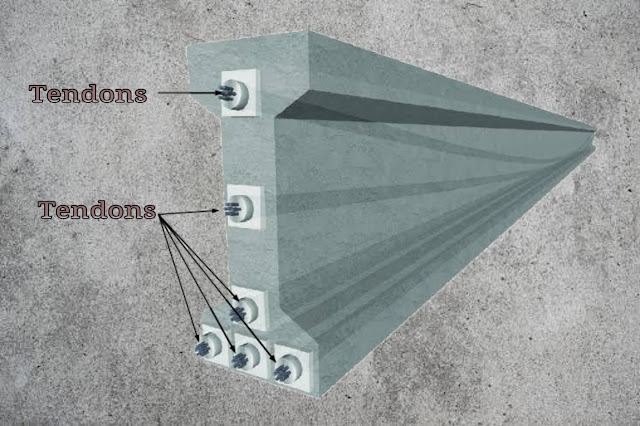
Image
  INTRODUCTION Hardened concrete as the artificial hard rock that could be designed or made with certain desired shape from casted fresh concrete, has some weaknesses that make it alone unfit for major structures which are the following ·        Have little or negligible strength against tension ·    Brittle property (not ductile), which makes it susceptible to cracking on loading When we design different major structures, there are two important criteria that are put into consideration    Safety of the structure against failure, the structure should be able to carry desired loads for intended period of time.   Serviceability or functional of the structure, where by the structure should neither deflect in extent that it affects comfort ability of users nor lead to detaching or breaking of attached materials such as tiles of curtain walls. Introduction of reinforcements which are ductile or elastic material into...
STRENGTHS OF HARDENED CONCRETE

Image
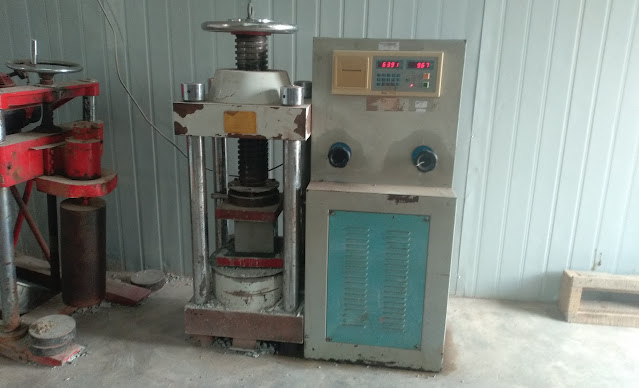
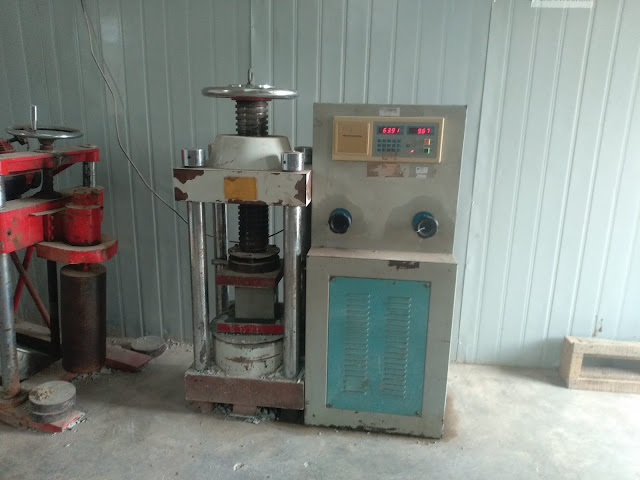
STRENGTH OF CONCRETE Is the property of hardened concrete to resist excessive strains due to induced stresses that could result to its failure, these stresses can be from internal or external factors. Strengths of hardened concrete can be distinguished from one to another regarding to type of stress or load that a concrete is required to resist, as follows 1. Compressive strength This is the ability of hardened concrete to resist compression stresses; the compression strength of concrete is the one which denotes grade of concrete, this is very important strength property of concrete than other strength properties because a). Easy to measure b). Other strength properties such as flexural shear and bond strengths they can be deduced from compressive strength through established correlations. Compression strength of concrete is measured through standard uniaxial compression test, which can be performed on concrete cubes or cylinders. On going compression strength testing of concrete cub...

PROPERTIES OF HARDENED CONCRETE

Image
In construction industry, concrete exist as most  popular building material exist in two forms as fresh concrete and hardened concrete. Fresh concrete , this is concrete in plastic state that can be poured or casted in different shaped forms to form artificial hard rock on hardening. Hardened concrete , this is the concrete in solid form, concrete that lost its plasticity property so it can not be poured or casted in forms. Concrete in each form or state has its specific properties which describe its behaviors in different conditions during its lifetime. The following are the properties of hardened concrete which describe how hardened concrete behaves and how they affected by external surrounding. Strength Strength , this is the ability of hardened concrete to withstand induced stresses in structure where is going to be used. The strength of concrete can be  expressed in three kinds, due to different kinds of stresses that exist from structure usage, here we have compressive s...

SIGNIFICANT TESTS FOR CONCRETE

Image
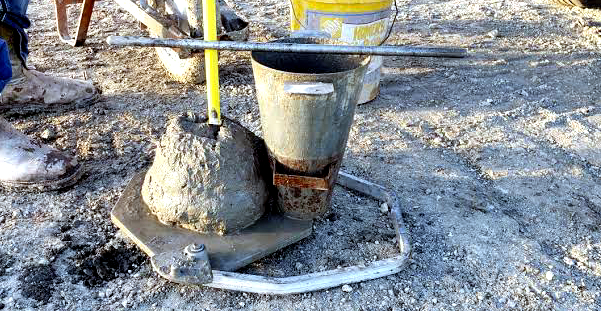
Concrete is the mixture of cement, aggregates, water with or without admixtures which harden to form artificial hard rock. Concrete is the one of the important and popular construction material,  concrete is used in construction of different structures such as Dams, Retain walls, roads, buildings, pipes and tanks. Concrete can be in two States or forms that is plastic state and in solid state. Concrete in plastic state is called fresh concrete , this concrete is in liquid or semi solid form, able to flow and has not yet set. Concrete in solid state is called hardened concrete , this is when it has changed  from liquid or semi solid form into solid form. Important characteristics of the Concrete that make it mostly and widely used are the following Concrete can be moulded into different shapes with significant strength . Economical Concrete of required properties can be produced for different projects . The two important tests There are two important tests that must be carried ...

CHEMICAL ADMIXTURES IN CONCRETE

Image
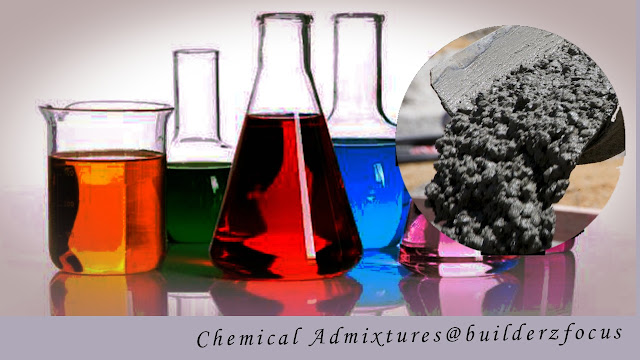
  CHEMICAL ADMIXTURES IN CONCRETE   A material other than water, aggregates, or cement that is used as an ingredient of concrete or mortar to control setting and early hardening, workability, or to provide additional cementing properties. Mostly of people are having some contradiction on considering additives as admixtures although both alter some properties, but they are put on different substances since additives are put during cement production while admixtures are put during concrete mixing. Reasons for using admixtures To suitable concrete of certain properties for complex structures. For economic purposes For maintaining quality of concrete during all stages of concrete work Admixtures can be divided into two categories as follows Mineral admixtures Chemical admixtures In this post will talk more about chemical admixtures as used in modifying properties of fresh and hardened concrete. Chemical admixtures these are water soluble compounds that are adde...

EFFECTS OF SALT IN CONCRETE

Image
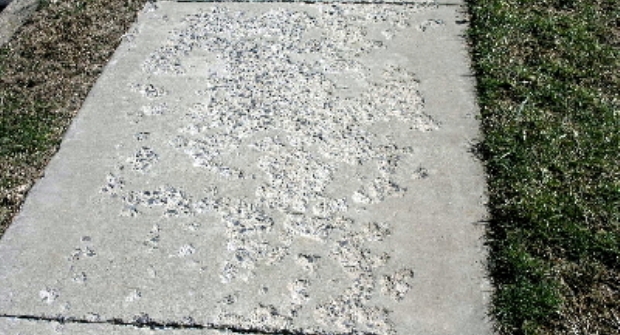
Salt has different results when mixed in concrete, different results is due to different chemical substances (elements) that it contains, so chlorides salts has different effects to sulfates salts. When Sulfates Salt is Added to Concrete Has the Following Effects When the concrete is mixed and / or cured by sulfates salt ( present in seawater), the concrete will have higher early strength (at 7 to 14 days) compared to concrete mixed by fresh water because at first salt acts as accelerator. But after 14 and 28 days and as time goes on there is reduction in concrete strength the strength of concrete. The salt can cause fretting (heave and cracks) due to salt attack this happens when salt crystallize on drying, this process is repeated as re-wets and dries (water curing). When Chlorides Salt is Added to Concrete Has the Following Effects The chlorides salt can be used as accelerator at early stage ( on early strength gaining) but after 14 to 28 days the will have ...

CONCRETE CURING BY POURING WATER

Image
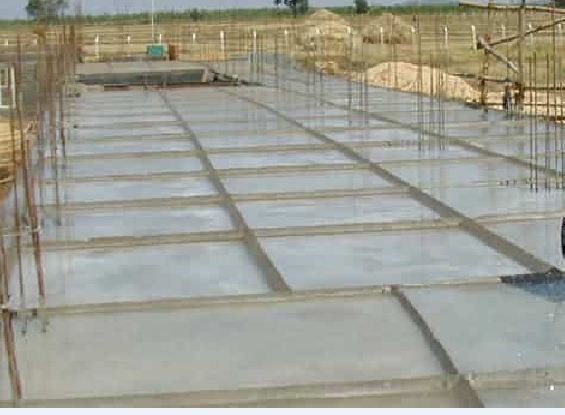
WHY DO WE CURE CONCRETE BY POURING WATER? Curing of concrete is the process that is done for a certain time in order that the concrete can attain the required strength, all we have to know is how water pouring functions on curing?, what happens if we do not pour water on concrete as curing method?, are there any other methods of curing out of pouring water? WATER POURING AS CURING METHOD Pouring water as curing method is the most common and traditional method which can be done by either of the following methods Ponding   This is the most common and inexpensive method of curing flat surfaces such as floor slabs, flat roofs, pavements and other horizontal surfaces. Sprinkling, fogging & mist curing : Using a fine spray or fog or mist of water can be an efficient method of supplying water to the concrete surface especially during hot weather, which helps to reduce the temperature of concrete, eventually conserving moisture inside the body of concr...

SETTING TIME OF CEMENT

Image
SETTING TIME OF CEMENT FOR CONSTRUCTION USE Cement is a hydraulic binder, i.e. a finely ground inorganic material which, when mixed with water, forms cement paste, cement paste has a plasticity property, get   hardened and to achieve strength within a short period of a time. It is therefore very important for us to know in how much time cement will lose its plasticity and start hardening, and how much time we will have to use the cement in concrete mixing and casting   during construction before hardening, this early time of the hardening of cement paste is known as setting time. Setting time of cement is defined as a specified time required for cement paste to change from liquid state to plastic state and plastic state to solid state so that surface becomes sufficiently rigid to withstand an external pressure onto it. Setting time of cement is the one which bring setting time of cement concrete, the type of cement you are using for concrete preparation and mixing ...